
Understanding the Structural Intelligence Behind Traditional Woodworking
Traditional craftsmanship remains fundamental to high-quality solid wood furniture manufacturing. Wood is a living material with inherent movement, density variation, and grain direction. Without a deep understanding of these characteristics, long-term durability cannot be achieved.
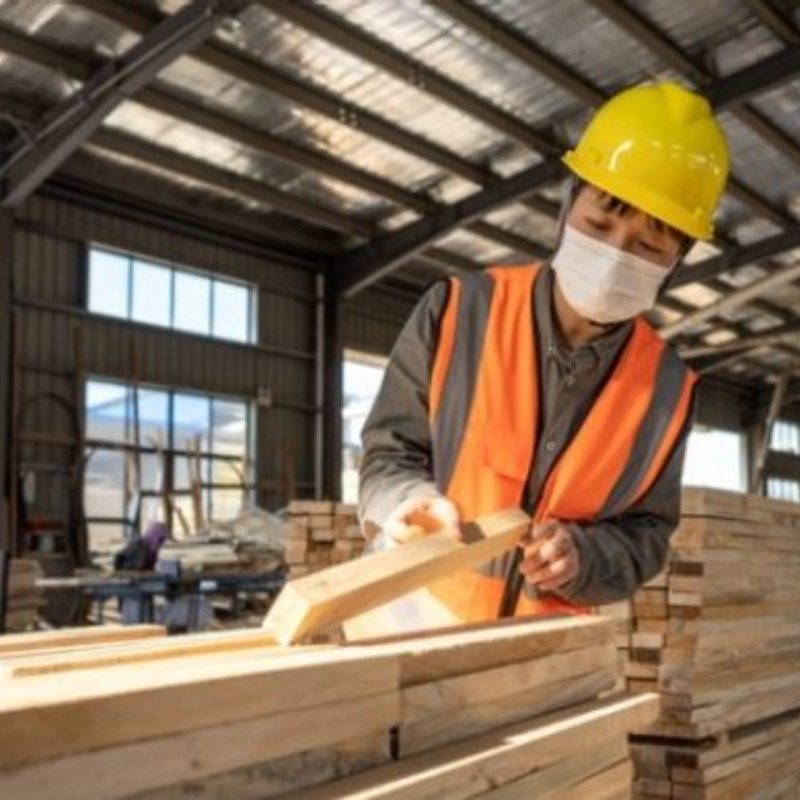
Skilled craftsmen evaluate timber not only for appearance but for structural suitability. They analyze grain alignment, natural tension, and moisture content before processing begins. This knowledge determines how components are cut, joined, and reinforced.
Joinery techniques such as mortise-and-tenon, dovetail, and dowel connections provide mechanical strength that adhesives alone cannot guarantee. These methods distribute structural load naturally across the frame. When properly executed, they allow furniture to remain stable for decades even under fluctuating humidity conditions.
Traditional woodworking is therefore not decorative nostalgia. It is applied material engineering developed through generations of practice.
Material Preparation and Moisture Control
One of the most critical aspects of solid wood furniture production is moisture management. Wood expands and contracts depending on environmental humidity. If improperly dried or conditioned, finished products may crack, warp, or separate at joints.
Modern factories integrate kiln-drying systems to reduce moisture content to internationally accepted levels, typically between 8% and 12% depending on export destination. However, traditional knowledge still guides wood selection and stacking orientation before drying.
After kiln treatment, materials are acclimatized within controlled workshop environments. Continuous humidity monitoring ensures dimensional stability throughout machining and assembly stages.
Without this combined approach, precision manufacturing alone cannot prevent long-term deformation.
The Role of CNC and Digital Manufacturing Systems
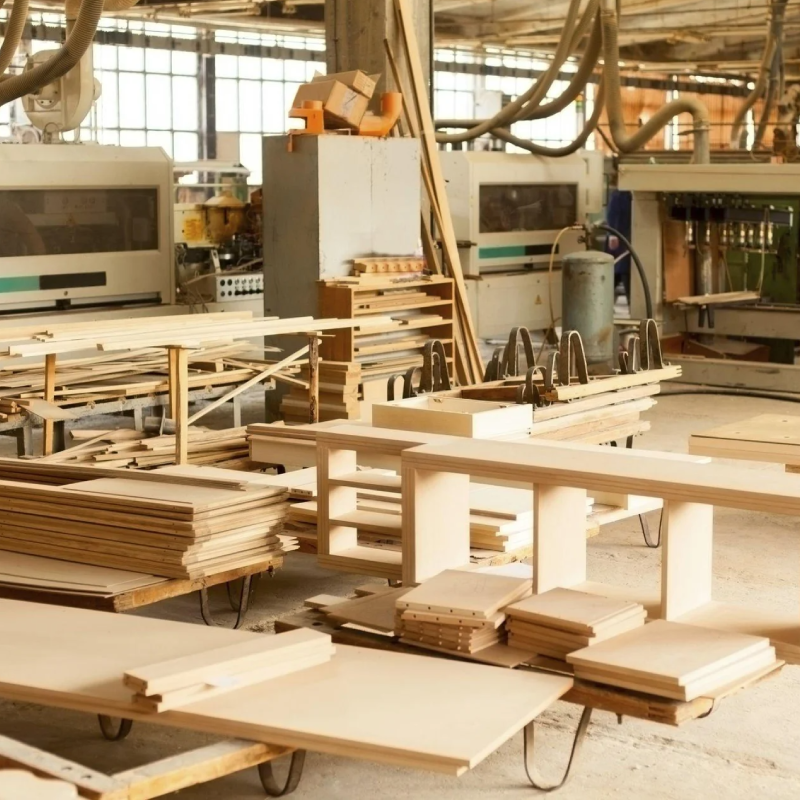
Modern solid wood furniture manufacturing relies heavily on CNC (Computer Numerical Control) machining technology. CNC routers cut components with repeatable precision, ensuring consistent dimensions across large production runs.
Digital nesting software optimizes raw material utilization, reducing waste and improving sustainability metrics. Automated drilling and shaping systems maintain strict tolerances required for export-grade assembly.
These technologies provide three major advantages:
- Dimensional accuracy
- Production scalability
- Reduced material waste
For global OEM and ODM projects, repeatability is essential. Buyers expect identical components across multiple shipments. CNC machining ensures that consistency.
Automation Without Losing Craftsmanship
Automation increases speed, but human expertise remains irreplaceable in several production stages.
Grain matching for tabletops requires visual judgment. Structural assembly demands careful alignment to avoid long-term stress concentration. Final sanding and edge softening influence tactile perception and perceived quality.
Experienced technicians inspect joints, surface flatness, and symmetry before finishing. They detect micro-variations that automated systems may overlook.
In high-end solid wood furniture production, machines create structural precision while craftsmen refine character and detail.
Surface Finishing as a Convergence Point
Surface finishing represents a critical intersection between technology and craftsmanship.
Automated spray lines ensure even coating thickness and controlled curing conditions. Meanwhile, skilled operators evaluate color consistency, gloss level, and grain enhancement.
Different finishing systems serve different applications:
- Oil finishes emphasize natural texture
- Lacquer systems provide smooth protective layers
- Polyurethane coatings increase abrasion resistance
Selecting the correct finish depends on product positioning, climate exposure, and target market standards. Export markets often require low-VOC coatings and compliance with chemical safety regulations.
Finishing accounts for a significant portion of production cost because it determines both durability and visual appeal.
Quality Control Systems in Export-Oriented Production
Global furniture buyers require consistent quality and regulatory compliance. Manufacturers must integrate systematic inspection procedures at multiple checkpoints.
Quality control typically includes:
- Moisture content testing
- Dimensional tolerance verification
- Structural load testing
- Surface adhesion testing
- Packaging integrity inspection
Traceability systems document batch numbers and material sourcing. This documentation supports international certifications and enhances buyer confidence.
Traditional experience reduces structural risk. Digital systems provide measurable quality assurance. Together, they create production reliability.
Strategic Importance in OEM and ODM Furniture Manufacturing
The balance between craftsmanship and industrial precision becomes especially important in OEM and ODM manufacturing models.
In OEM furniture projects, buyers provide technical drawings and product specifications. The factory must replicate designs precisely while maintaining structural durability. CNC systems ensure exact reproduction. Skilled workers ensure assembly quality.
In ODM furniture projects, manufacturers contribute design capabilities. Craftsmanship enhances differentiation, while automated production maintains competitive pricing.
Factories capable of handling both models offer greater flexibility to international distributors and retailers.
Competitive Positioning in the Global Furniture Industry
The global furniture market is increasingly competitive. Mass-production facilities compete on price. Boutique workshops compete on artisanal exclusivity.
Manufacturers that combine traditional woodworking knowledge with advanced production technology occupy a strategic middle position. They deliver scalable production volumes while preserving authenticity and durability.
This hybrid model supports:
- Stable export performance
- Reduced defect rates
- Faster lead times
- Customization capability
- Stronger long-term partnerships
As sustainability, durability, and product longevity gain importance in purchasing decisions, integrated manufacturing systems provide measurable competitive advantage.
Frequently Asked Questions (FAQ)
Why is traditional craftsmanship still important in modern furniture manufacturing?
Traditional craftsmanship ensures structural integrity, correct wood behavior management, and long-term durability. Machines provide precision, but they cannot replace material judgment and grain evaluation expertise.
How does CNC technology improve solid wood furniture production?
CNC systems increase dimensional accuracy, reduce waste, and enable consistent batch production. This precision is essential for large-scale OEM and ODM export projects.
Is automation replacing skilled woodworkers?
No. Automation handles repetitive processes, while skilled workers manage assembly refinement, inspection, and finishing. Both roles are complementary.
What quality controls are necessary for export furniture?
Export furniture production requires moisture control, structural testing, surface inspection, and compliance with chemical and safety standards depending on the destination market.